
Is It Better to Prompt Once or Iterate Multiple AI Prompts?
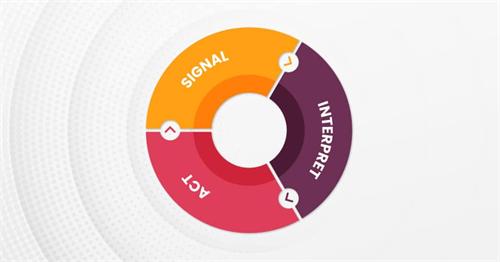
I didn’t learn prompt strategy from tutorials. I learned it the hard way—under time pressure.
A few months ago, I was helping a friend prepare for a job transition into data analysis. He had solid fundamentals but struggled with case-style interview questions. Naturally, we turned to AI for practice. At first, we treated it like a search engine with better grammar: ask a question, get an answer, move on.
That approach failed almost immediately.
The answers looked correct, even impressive, but they didn’t help him think better. They didn’t simulate real interview pressure, didn’t challenge assumptions, and didn’t expose weaknesses. That’s when I realized something important: the problem wasn’t the AI—it was how we were prompting it.
The Core Question: One Prompt or Many?
At a surface level, the question seems simple:
- Should you craft one highly detailed prompt and expect a complete answer?
- Or should you interact step-by-step, refining the output over multiple rounds?
In reality, this is not just about efficiency. It’s about how thinking evolves during problem-solving.
One-shot prompting assumes:
“I already understand the problem well enough to describe it perfectly.”
Iterative prompting assumes:
“My understanding will improve as I see responses and react to them.”
Most real-world tasks fall into the second category.
A Concrete Example (Non-Writing): Practicing a Technical Interview Case
Let me walk you through a real scenario we used.
Step 1: One-Shot Prompt
We started with this:
“Give me a data analysis case interview question and provide a complete answer.”
The output was polished. It included:
- A structured question
- A step-by-step solution
- A clean conclusion
On paper, it looked great.
In practice, it was useless.
Why? Because it skipped the most important part: the struggle. In real interviews, you don’t get the answer. You have to think through ambiguity, ask clarifying questions, and make decisions under uncertainty.
The AI gave us the end result, not the process.
Step 2: First Iteration — Change the Role
We adjusted the prompt:
“Act as an interviewer. Give me a data analysis case, but do not provide the answer. Ask follow-up questions based on my responses.”
This changed everything.
Now, instead of passively reading, my friend had to engage. The AI responded dynamically, sometimes even pointing out weak reasoning.
But something was still missing.
Step 3: Second Iteration — Increase Realism
We refined further:
“Make the case messy and slightly ambiguous, like a real business scenario. Include irrelevant data points and let me decide what matters.”
Now the exercise started to resemble real-world problems.
The AI introduced:
- Conflicting metrics
- Incomplete information
- Slightly misleading details
At this point, my friend began making mistakes—which was exactly what we wanted.
Step 4: Third Iteration — Add Feedback Layer
Next prompt:
“After I answer each step, critique my reasoning like a senior analyst. Focus on gaps in logic, not just correctness.”
This was the turning point.
Instead of just moving forward, the AI started doing something more valuable:
- Highlighting assumptions
- Questioning shortcuts
- Suggesting alternative approaches
This is something a one-shot prompt could never replicate.
Step 5: Final Iteration — Simulate Pressure
Finally, we added:
“Limit my time and occasionally interrupt with new information, like a real interview.”
Now it wasn’t just practice—it was simulation.
And here’s the key insight:
None of this could have been achieved in a single prompt.
Not because it’s impossible to write a long, complex instruction—but because we didn’t know what we needed at the beginning.
What This Example Reveals
This experience highlights a pattern I’ve seen repeatedly across different domains—learning, decision-making, even planning travel or managing finances.
1. The first prompt exposes your blind spots
You think you know what you want, but the output reveals what you overlooked.
2. Iteration builds context
Each round adds layers: constraints, realism, expectations.
3. Quality emerges gradually
Not from a perfect instruction, but from continuous adjustment.
When One-Shot Prompting Still Makes Sense
It’s easy to overcorrect and assume iteration is always better. It’s not.
There are clear cases where one-shot prompting is the smarter move.
Well-defined tasks
For example:
- Converting units
- Summarizing a document
- Generating a checklist
If the task is clear and bounded, iteration adds little value.
Time-sensitive situations
If you need a quick answer, even a slightly imperfect one-shot response can be good enough.
Exploration phase
Sometimes you just want a range of ideas, not depth. One prompt can give you that quickly.
The Hidden Risk of One-Shot Prompting
The biggest issue isn’t that it fails—it’s that it feels like it works.
You get an answer that looks:
- Structured
- Confident
- Complete
But underneath, it may lack:
- Real-world applicability
- Nuanced reasoning
- Adaptability
This is especially dangerous in professional contexts, where decisions rely on subtle judgment rather than surface correctness.
What Experienced Users Actually Do
If you look at how people who rely heavily on AI operate (developers, analysts, researchers), a pattern emerges.
They don’t aim for perfect prompts.
They aim for fast feedback loops.
One user in a discussion thread put it this way:
“I treat the first answer as a draft of the problem, not the solution.”
Another mentioned:
“The AI gets better as I get clearer. It’s a two-way process.”
This reflects a deeper shift: AI is not just answering questions—it’s helping refine them.
A Practical Workflow You Can Apply
If you want something actionable, here’s a framework that works across different use cases—not just interviews.
Round 1 — Get a baseline
“Give me a basic version of [task].”
Don’t over-specify. Just start.
Round 2 — Identify weaknesses
Ask yourself:
- What feels unrealistic?
- What’s missing?
- What’s too simplified?
Then prompt:
“What are the limitations of this approach?”
Round 3 — Add constraints
“Make this more realistic by adding [specific challenge].”
Round 4 — Introduce interaction
“Turn this into an interactive process where I have to respond step-by-step.”
Round 5 — Add evaluation
“Critique my responses and suggest improvements.”
Round 6 — Stress test
“Introduce unexpected variables or constraints.”
This process turns AI from a passive tool into an active training environment.
The Deeper Point Most People Miss
This isn’t really about prompting.
It’s about how humans think through complex problems.
In real life:
- You rarely define a problem perfectly at the start
- You adjust based on feedback
- You refine your approach as new information appears
Iterative prompting mirrors that process.
One-shot prompting assumes clarity.
Iteration creates clarity.
Final Thoughts
If your task is simple, clear, and low-stakes, one-shot prompting is efficient and often sufficient.
But if you’re dealing with:
- Learning
- Decision-making
- Skill development
- Real-world problem-solving
Then iteration isn’t just helpful—it’s necessary.
Not because AI requires it, but because you do.
The real advantage doesn’t come from writing better prompts.
It comes from recognizing that the first answer is rarely the final one—and being willing to keep going until it actually becomes useful.
Recommend for you:

Are Paid AI Tools Worth It or Are Free Tools Enough?
The real question is not whether paid AI tools are “worth it” in general.
Should You Use AI for Learning and Research Tasks?
Artificial intelligence has quietly moved from being a “novel tool” to something that now sits inside everyday learning and research workflows.
When AI Corrections Introduce More Errors
The promise is simple: reduce human error by letting machines detect and correct mistakes automatically.
AI Video Tools vs Manual Editing: Where Is the Real Time Saving?
Why AI Feels Faster Than It Often Is