When AI Corrections Introduce More Errors

AI tools are increasingly positioned as correction engines—grammar fixers, coding assistants, writing improvers, medical triage support systems, data cleanup tools, and even decision-support layers inside business software. The promise is simple: reduce human error by letting machines detect and correct mistakes automatically.
But in real-world use, something more complicated often happens. AI corrections do not always reduce errors. In some cases, they multiply them.
A sentence gets “improved” into something factually wrong. A piece of code becomes syntactically valid but logically broken. A medical summary is rewritten in a way that subtly changes clinical meaning. A spreadsheet is auto-fixed in a way that corrupts underlying assumptions. The correction layer, instead of acting as a safety net, becomes a distortion filter.
This phenomenon is not just a technical curiosity. It is a growing operational risk for individuals and organizations that rely heavily on AI assistance without understanding its failure modes.
1. The Core Paradox: AI Is Optimized for Plausibility, Not Truth
At the heart of the problem is a mismatch between what AI systems are trained to do and what users expect them to do.
Most modern AI systems are optimized to produce plausible outputs, not guaranteed correct ones. When they “correct” something, they are not verifying truth in a strict sense. They are generating the most statistically likely improvement based on patterns seen during training.
This leads to a subtle but dangerous effect:
- Humans expect corrections to increase accuracy
- AI produces outputs that increase fluency and coherence
- Fluency is often mistaken for correctness
So when AI “fixes” a sentence or code snippet, it may actually replace a small, correct but unusual structure with a more common but incorrect one.
For example:
- A rare technical term might be replaced with a more familiar but incorrect synonym
- A precise legal phrasing might be simplified into something legally ambiguous
- A mathematically correct expression might be “normalized” into a wrong but more typical format
The result is not obviously broken. In fact, it often looks improved—which makes the error harder to detect.
2. The “Correction Cascade” Effect
One of the most overlooked issues is what can be called a correction cascade: once AI starts modifying content, it tends to propagate secondary changes that were never necessary.
A typical cascade looks like this:
1. AI identifies a perceived issue
2. It rewrites the local section to “fix” it
3. The rewrite changes surrounding context
4. New inconsistencies appear
5. AI attempts to resolve those inconsistencies too
6. The original meaning gradually drifts away
This is especially dangerous in structured content such as:
- Legal documents
- Technical documentation
- Data analysis reports
- Software codebases
- Scientific summaries
The more interconnected the content, the higher the risk that a local correction causes global distortion.
In many cases, the original “error” was not actually an error at all—it was just unfamiliar to the model.
3. Hallucinated Fixes: When AI Confidently Repairs Things That Were Already Correct
A particularly insidious failure mode is over-correction: AI “fixes” something that does not need fixing.
This often happens in three situations:
1. Ambiguous but correct inputs
If a sentence can be interpreted multiple ways but is still valid, AI tends to choose one interpretation and “correct” the rest of the text to match it.
2. Domain-specific language
Technical jargon, slang, or niche conventions are often “normalized” into incorrect general-language equivalents.
3. Rare but valid structures
Uncommon grammar or formatting patterns are often treated as mistakes simply because they are statistically rare.
The danger here is psychological: users tend to trust corrections more than original text. So even when AI introduces an error, it is often accepted as an improvement.
4. Why AI Corrections Fail More in High-Stakes Contexts
The impact of correction errors increases dramatically in structured, high-stakes environments.
In programming
A small “fix” can:
- Change logic flow
- Introduce off-by-one errors
- Break concurrency assumptions
- Modify API behavior subtly
In healthcare documentation
A rewritten note can:
- Change symptom interpretation
- Alter dosage meaning
- Introduce ambiguity in clinical instructions
In finance or data pipelines
A correction can:
- Shift decimal interpretation
- Alter aggregation logic
- Change categorization rules
The key issue is that AI does not “understand responsibility boundaries.” It treats all text as editable, even when parts should remain invariant.
5. The Human Factor: Over-Trust in the Correction Layer
One of the biggest risks is not the AI itself, but how humans interact with it.
When people see a corrected version, they often assume:
- The AI detected an issue correctly
- The new version is safer than the original
- No further verification is needed
This creates a cognitive shortcut: trust the correction, skip validation.
This is especially common under time pressure. In fast workflows, users accept AI corrections as “final truth” rather than “suggestions.”
Over time, this leads to a dangerous dependency loop:
- Users stop reviewing raw input
- AI becomes the default editor
- Errors become harder to trace because original intent is lost
6. How to Detect When AI Corrections Are Introducing Errors
There are practical signals that indicate AI correction is drifting into error generation:
Signal 1: Meaning drift without obvious syntax errors
If the output looks polished but subtly changes intent, be suspicious.
Signal 2: Over-expansion of simple inputs
If a simple sentence becomes significantly longer without new meaningful information, the model may be over-interpreting.
Signal 3: Replacement of domain-specific terms
If specialized terminology is replaced with general language, accuracy may be compromised.
Signal 4: Repeated rephrasing cycles
If multiple AI passes keep “improving” the same text, quality usually degrades after the first or second pass.
7. Practical Strategies to Prevent AI-Induced Correction Errors
The goal is not to avoid AI corrections entirely, but to control their scope and introduce structural safeguards.
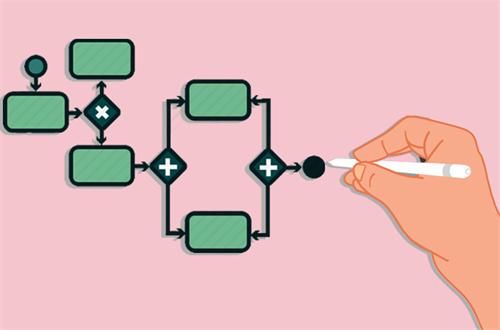
1. Separate “Detection” from “Correction”
Instead of asking AI to directly fix content, split the task:
- Step 1: “Identify potential issues”
- Step 2: Human reviews flagged items
- Step 3: Apply selective corrections
This reduces blind rewriting and preserves original intent.
2. Use Minimal-Change Rules
Instruct AI explicitly:
> “Only change what is necessary. Do not rephrase or restructure unless required.”
This constraint significantly reduces drift.
3. Keep a Versioned Original
Never overwrite original input immediately. Maintain:
- Raw version
- AI-suggested version
- Final human-approved version
This makes it possible to trace where errors were introduced.
4. Validate Against External Sources or Rules
For structured domains:
- Code → run tests
- Data → validate constraints
- Medical → cross-check protocols
- Legal → compare with source documents
AI should never be the final authority in isolation.
5. Limit Iterative AI Editing
One of the most common mistakes is repeatedly feeding AI its own output.
Each iteration increases:
- Style drift
- Semantic distortion
- Hidden assumption layering
A practical rule:
- One correction pass is often safe
- Two passes require review
- Three or more passes require rebuilding from original
6. Treat AI as a “Suggestion Engine,” Not a “Truth Engine”
This mental model shift is critical. AI is best used as:
- A second reader
- A pattern suggester
- A consistency checker
Not as an automatic authority that improves correctness by default.
8. A More Realistic Way to Use AI Correction Systems
The most effective workflows are not the most automated ones—they are the most structured ones.
A robust model looks like this:
1. Human produces or collects original content
2. AI flags potential issues (not changes them directly)
3. Human evaluates flagged items
4. AI optionally proposes alternatives
5. Human makes final decision
6. System logs changes for traceability
This keeps AI in a supportive role rather than a rewriting authority.
Conclusion: Correction Is Not the Same as Improvement
The assumption that “correction equals improvement” is one of the most misleading ideas in modern AI-assisted workflows.
AI can improve clarity, consistency, and speed—but it can also silently distort meaning while appearing helpful. The danger is not obvious failure, but convincing imperfection: outputs that look better while becoming less accurate.
Understanding this distinction is essential for anyone using AI in serious workflows. The goal is not to avoid AI corrections, but to design systems where corrections are always reviewable, reversible, and constrained.
In the end, the most reliable setup is not full automation—but controlled collaboration, where human judgment remains the final filter between “plausible” and “true.”
Recommend for you:
AI Strategy for Career Switchers Entering Tech Fields
A growing number of professionals are switching into tech from completely unrelated backgrounds—healthcare, education, logistics, finance, even the arts.
The Hidden Risks of Using AI Tools (Privacy, Lock-In, and Control)
If you’re going to use AI tools—which, realistically, most people will—it’s worth understanding where the risks actually sit, and how to manage them without overreacting or disengaging entirely.
Should You Use AI During Brainstorming or After Ideas Are Formed?
Should AI be part of the brainstorming process itself, or should it only come in after you’ve already formed your ideas?
Which AI Tools Should You Use Based on Your Skill Level? (Beginner to Advanced)