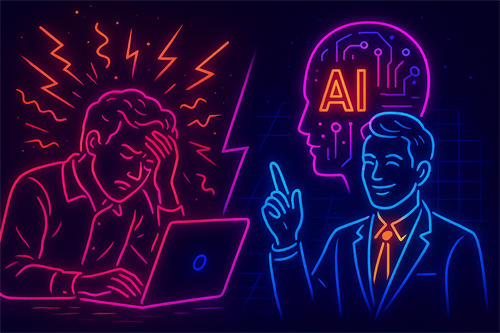
How to Use AI Without Losing Original Thought
Artificial intelligence has quietly shifted from being a “tool you occasionally consult” to something many people now rely on throughout their thinking process. It drafts emails, summarizes research, generates ideas, rewrites arguments, and even helps decide what to say next. The convenience is undeniable. But there is a less visible cost emerging: a gradual weakening of original thought.
Not in the dramatic sense of “people stop thinking,” but in a more subtle way—ideas begin to feel pre-digested, arguments start to sound interchangeable, and personal judgment is increasingly replaced by AI-shaped default answers. The real challenge today is not whether we should use AI, but how to use it without outsourcing the cognitive effort that makes thinking meaningful in the first place.
1. The Real Risk: Cognitive Substitution, Not AI Dependency
Most discussions about AI overuse focus on “dependency,” but the deeper issue is substitution. Dependency means you still think but rely on help. Substitution means AI begins to occupy the thinking step itself.
This happens quietly. For example:
- Instead of forming an argument, you ask AI to “write a strong argument.”
- Instead of structuring ideas, you ask AI to “organize this logically.”
- Instead of reflecting, you ask AI to “summarize what this means.”
Each step seems harmless. However, over time, your brain skips the uncomfortable but necessary stage of forming partial, messy, imperfect thoughts—the very stage where originality is born.
Original thinking is rarely clean. It is slow, fragmented, and sometimes contradictory. AI, by contrast, produces polished coherence instantly. If you always start from polished output, your mind gradually loses tolerance for the messy early stage of thinking.
The goal is not to avoid AI, but to protect that “messy stage.”
2. The Golden Rule: Think First, Prompt Second
One of the simplest but most powerful habits is this:
Never let AI be the starting point of your thinking process.
Before opening an AI tool, spend at least a few minutes forming your own version of the idea—even if it is incomplete.
For example:
- Write your rough opinion in bullet points.
- Sketch a mental structure, even if it feels wrong.
- Identify what you actually know versus what you assume.
This creates what can be called a “cognitive anchor.” Once your mind has taken a position, AI becomes a tool for refinement, not replacement.
Without this step, AI tends to define the frame of thinking. And framing is often more influential than content itself.
3. Use AI as a “Challenger,” Not an “Author”
A major shift in mindset is required: stop treating AI as a writer, and start treating it as a critical opponent.
Instead of asking:
- “Write me an article about X”
Try asking:
- “Here is my argument. Where is it weak or incomplete?”
- “What assumptions am I making that might be wrong?”
- “How would a skeptical expert respond to this idea?”
This transforms AI from a generator of answers into a generator of pressure.
Why is this important? Because original thinking does not come from agreement—it comes from friction. When AI challenges your ideas rather than replaces them, it strengthens your reasoning instead of flattening it.
A useful mental model is:
AI should increase the number of questions in your head, not decrease them.
4. Separate “Creation Mode” and “Refinement Mode”
One hidden problem with AI workflows is mixing two fundamentally different cognitive states:
- Creation Mode: messy, exploratory, intuitive
- Refinement Mode: structured, analytical, critical
AI is extremely good at refinement, but dangerous when used too early in creation.
A practical workflow separation helps:
Step 1: Creation (No AI)
You generate raw thoughts:
- ideas
- analogies
- structure fragments
- even contradictions
Step 2: Externalization (Optional AI support)
You use AI to organize what already exists.
Step 3: Reflection (Human ownership)
You decide what matters, what to remove, and what to rewrite.
The key is that AI never touches a blank mind—it only works on something already shaped by your thinking.
This separation alone preserves a surprising amount of originality.

5. Watch Out for “Language Homogenization”
One of the most underestimated effects of AI is language convergence. Because AI is trained on common patterns, it tends to produce:
- balanced arguments
- neutral tone
- predictable transitions
- standardized reasoning structures
Over time, users begin to sound like AI, even in their private notes.
To counter this, deliberately introduce friction into your writing and thinking:
- keep imperfect phrases that reflect your real thought process
- allow ambiguity when certainty is not justified
- preserve unusual comparisons or metaphors that come from personal experience
Original thinking often looks slightly “uneven” in language. That unevenness is not a flaw—it is a signal of authenticity.
6. Build a “Non-AI Memory Layer”
A subtle risk of heavy AI use is externalized memory. You stop remembering how you reached conclusions because AI did part of the reasoning.
To counter this, maintain a simple habit:
After using AI, write down in your own words:
- what you agree with
- what you reject
- what remains uncertain
This does two things:
1. It forces cognitive processing after exposure
2. It builds a personal reasoning archive instead of an AI-dependent one
Over time, this becomes your intellectual fingerprint—a record of how you think, not just what you consume.
7. Intentionally Delay AI Feedback
Instant feedback reduces cognitive depth. If every idea is immediately validated or corrected by AI, your tolerance for uncertainty shrinks.
A useful technique is “delayed consultation”:
- Spend time developing an idea fully before asking AI
- Even intentionally let weak ideas exist longer than comfortable
- Only then bring AI in for critique
This delay preserves cognitive struggle—the part where real insight tends to emerge.
Thinking is often not about correctness first; it is about exploration depth first, correctness second.
8. Redefine Productivity: Output vs Thought Quality
AI tools often optimize for output quantity:
more articles, more ideas, more drafts, more speed.
But intellectual growth depends more on:
- depth of reasoning
- clarity of assumptions
- quality of internal models
A useful reframe is:
Instead of asking “How much did I produce today?”
ask “How many of my thoughts today would still make sense without AI?”
This question reveals whether AI is amplifying thinking or replacing it.
9. The Most Important Principle: Ownership of Decisions
Ultimately, maintaining original thought comes down to one principle:
You must remain the final decision-maker of meaning.
AI can:
- suggest
- refine
- challenge
- expand
But it should never:
- define your conclusion
- choose your stance
- decide what is important
The moment AI becomes the source of “final interpretation,” originality begins to fade.
Even if AI produces better wording or structure, the intellectual ownership must remain yours.
Conclusion: AI as Cognitive Extension, Not Cognitive Replacement
The healthiest relationship with AI is not resistance and not dependence, but structured collaboration. Think of AI as an external thinking surface—not your internal thinking engine.
Original thought does not disappear because AI exists. It disappears when people stop exercising the internal steps that produce it: uncertainty, friction, slow reasoning, and imperfect expression.
If used carefully, AI can actually deepen thinking by exposing blind spots and accelerating iteration. But this only works when the human mind remains the origin point of ideas, not just the receiver of polished outputs.
In the end, the question is not “How powerful is AI?”
The real question is: “What part of thinking do I refuse to outsource?”
Recommend for you:

Should You Use AI First or Google First in Research Workflows?
A few years ago, my research workflow was simple: open Google, skim the first five results, maybe click into a Reddit thread if I felt stuck, and then slowly piece together an answer.
AI Video Tools vs Manual Editing: Where Is the Real Time Saving?
Why AI Feels Faster Than It Often Is
When AI Output Becomes a Cognitive Shortcut Problem
Psychologists have long studied heuristics—mental shortcuts that help us make decisions quickly.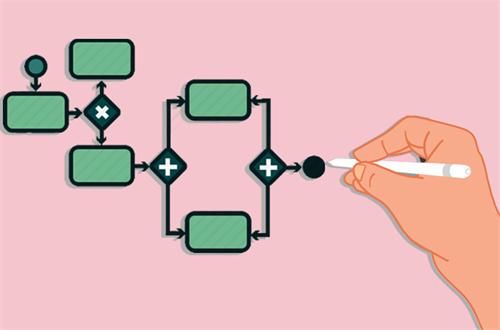
How to Detect Redundant Tools in Your Stack
Redundancy in a tool stack is rarely obvious at first. It does not show up as a single broken system or a clear failure. It appears quietly through duplicated functionality, scattered data, inconsistent workflows, and subtle cognitive friction.