
Can You Trust AI Tools for Medical Information? A Practical Evaluation Guide
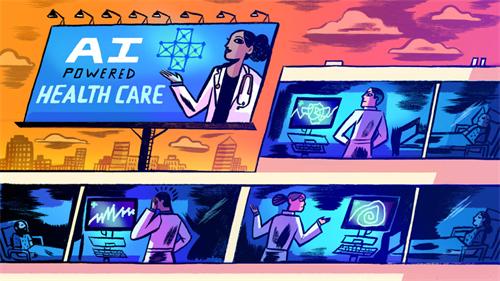
The question is no longer whether people use AI for medical information—it’s how often, how deeply, and at what stage of their decision-making they rely on it. Patients check symptoms late at night. Parents look up a child’s fever before deciding whether to go to the hospital. Even clinicians quietly use AI tools to summarize guidelines or review unfamiliar topics.
The convenience is real. But in medicine, convenience without judgment can be dangerous.
If you are expecting a simple yes-or-no answer—whether AI can be trusted—the reality is more nuanced. Trusting AI in healthcare is not a binary decision. It is a practical skill. And like any skill, it depends on how you use the tool, when you use it, and where you draw the boundary.
The Core Problem: AI Sounds Convincing Even When It’s Incomplete
One of the biggest risks with AI-generated medical information is not obvious misinformation. It is plausible incompleteness. The answers are often well-structured, use correct terminology, and feel authoritative.
That creates a subtle but critical illusion:
“This sounds right, so it must be sufficient.”
In reality, most AI systems are not reasoning clinically. They are predicting language patterns based on large datasets. That means:
- They can explain known medical concepts quite well
- They can summarize common conditions accurately
- They can also miss context, overlook nuance, or provide outdated perspectives
In medicine, missing context matters more than being slightly wrong. Because decisions are not made on information alone—they are made on priorities, probabilities, and risk.
Where AI Is Genuinely Useful
AI performs best in areas where structure and explanation matter more than judgment.
Translating Medical Language
Medical terminology can be a barrier. AI is particularly effective at turning complex language into something understandable. This lowers the threshold for patients to engage with their own health.
Building Foundational Understanding
AI can help you understand:
- How common conditions work
- What typical symptoms look like
- What standard treatment pathways involve
This is especially useful after receiving a diagnosis, when time with a clinician may have been limited.
Preparing for a Medical Visit
This is where AI becomes unexpectedly powerful—and often under-discussed.
Instead of going into a consultation unprepared, you can use AI to:
- Clarify your symptoms
- Organize your thoughts
- Generate meaningful questions
Done correctly, this does not replace a doctor. It makes your interaction with one more effective.
A More Realistic Use Case: Using AI Before Seeing a Doctor
Let’s address a common and practical scenario directly:
If you use AI to gather medical information first, and then go to a doctor—does that lead to better outcomes?
In many cases, yes. But only if you use AI as a structuring tool, not a decision-maker.
How It Helps (When Done Right)
1. You Describe Symptoms More Precisely
Instead of vague descriptions like:
“I feel uncomfortable”
You can present:
“I’ve had intermittent chest tightness for three days, worse after exertion, no fever”
That level of clarity improves diagnostic efficiency.
2. You Ask Better Questions
You move from passive listening to active engagement:
- “Could this be related to iron deficiency or thyroid function?”
- “What signs would indicate that this is getting worse?”
This sharpens the consultation without undermining the clinician.
3. You Understand Explanations Faster
When you already have baseline knowledge, you can:
- Follow clinical reasoning more easily
- Identify what you don’t understand
- Make more informed decisions about next steps
But It Can Also Backfire
Using AI before a consultation is not automatically beneficial. There are real cognitive risks.
Anchoring Bias
If AI suggests a specific condition, you may fixate on it and unintentionally filter out other possibilities.
Overconfidence
Partial knowledge can feel like full understanding. This can lead to:
- Minimizing serious symptoms
- Overreacting to benign ones
Information Overload
Too much pre-reading can increase anxiety and reduce clarity, especially before a decision point.

A Practical Method: How to Use AI Before Seeing a Doctor
If you want to use AI effectively in this scenario, here is a structured approach you can apply immediately.
Step 1: Ask for Structure, Not Diagnosis
Avoid:
“What disease do I have?”
Instead ask:
- “What categories of conditions could cause these symptoms?”
- “What information is important for a doctor to assess this?”
Your goal is to organize—not conclude.
Step 2: Build a Clear Symptom Summary
Use AI to help you structure:
- Onset (when it started)
- Duration (constant or intermittent)
- Triggers (activity, food, stress)
- Associated symptoms
- Relevant medical history
This is far more useful than a guessed diagnosis.
Step 3: Generate Focused Questions
Ask AI to suggest questions, then refine them into:
- Clarification questions
- Risk-related questions
- Next-step questions
Avoid leading questions that push toward a specific diagnosis.
Step 4: Separate What You Know from What You Assume
Explicitly define:
- What is observable fact
- What is your interpretation
This reduces bias before you speak to a clinician.
Step 5: Bring Structure, Not Conclusions, to the Doctor
Better approach:
“I organized my symptoms like this, and I have a few questions.”
Less effective approach:
“AI said this is probably X—do you agree?”
The first supports collaboration. The second can distort the interaction.
After the Consultation: AI Still Has a Role
The use of AI should not stop after you see a doctor. In fact, this is another high-value moment.
You can use AI to:
- Translate your diagnosis into plain language
- Understand medications and possible side effects
- Clarify lifestyle recommendations
- Prepare for follow-up decisions
For example:
“What does this diagnosis mean in practical terms?”
“What should I monitor over the next two weeks?”
This reinforces understanding without replacing professional advice.
Where AI Becomes Unreliable
Despite its usefulness, there are clear boundaries you should not cross.
Symptom Diagnosis
AI can list possibilities, but it cannot safely prioritize them for your specific case.
Personalized Treatment Decisions
It does not reliably account for:
- Your full medical history
- Drug interactions
- Local clinical guidelines
Emergency Situations
This is absolute.
Symptoms like:
- Chest pain
- Sudden neurological changes
- Severe breathing difficulty
require immediate medical attention—not AI interpretation.
A Practical Evaluation Framework
Instead of asking, “Can I trust AI?”, ask:
“Is this specific output reliable in this specific context?”
Evaluate using these criteria:
- Task type: Is this explanation or decision-making?
- Uncertainty: Does the answer acknowledge limitations?
- Context: Does it consider individual factors?
- Consistency: Does it align with trusted medical sources?
- Risk: What happens if this is wrong?
The higher the risk, the less you should rely on AI alone.
A Workflow That Actually Works
Putting everything together, a safe and effective approach looks like this:
1. Notice symptoms
2. Use AI to organize and understand
3. Consult a medical professional for diagnosis and decisions
4. Use AI afterward to reinforce understanding and follow guidance
At no point does AI replace the doctor.
But at multiple points, it improves your role in the process.
The Real Advantage: You Become More Effective in Healthcare
The biggest benefit of using AI in this way is not better information—it is better interaction with the healthcare system.
You become:
- More precise in communication
- More efficient in consultations
- More aware of uncertainty
- More engaged in decision-making
And in real-world medicine, these factors often influence outcomes more than raw information alone.
Final Thought
AI is not a decision-maker. It is not a substitute for clinical judgment. But it can be a powerful assistant that helps you think more clearly, communicate more effectively, and navigate medical uncertainty with greater confidence.
Recommend for you:
When AI Output Becomes a Cognitive Shortcut Problem
Psychologists have long studied heuristics—mental shortcuts that help us make decisions quickly.
Should You Let AI Handle Your Communication (Emails, Replies, Proposals)?
Why spend 20 minutes polishing an email when an AI can generate one in 10 seconds?
What AI Tools Do People Actually Use Every Day? (Real Workflows Explained)
They are not building “AI-first companies.” They are building AI-assisted habits.
AI Note-Taking vs Manual Notes: What Actually Improves Memory Retention?
The Core Problem: Note-Taking Has Two Completely Different Goals